
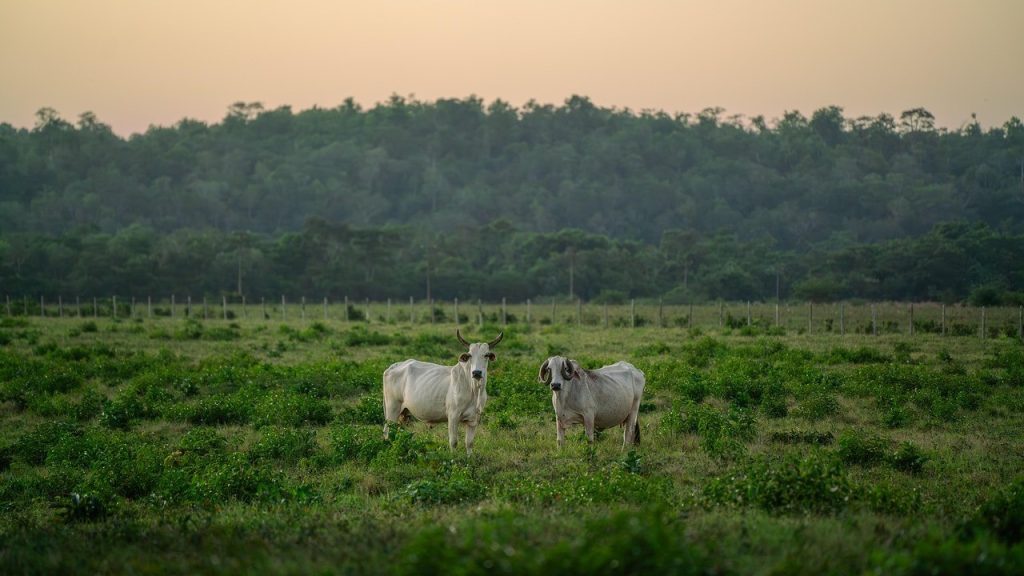
On a November morning in Christiana, Tennessee, the lawn mowers at a Middle Tennessee solar field make almost no sound at all. Where diesel engines would normally drone between the rows, the only noise drifting across the panels is an occasional moo. Fifteen Murray Grey cattle rotate through fifteen fenced paddocks here, keeping the Bermuda grass down the way a mowing crew would elsewhere. The site is Christiana Solar Ranch, a 3.25-megawatt solar farm on 40 acres in Rutherford County, built and operated by Silicon Ranch, Tennessee’s largest solar developer. Six months earlier, this same field was the first commercial deployment of CattleTracker, a patented tracking system the company engineered specifically to let a working cattle herd graze safely underneath a utility-scale solar array.
A tracker built around a cow’s shoulders, not just the sun
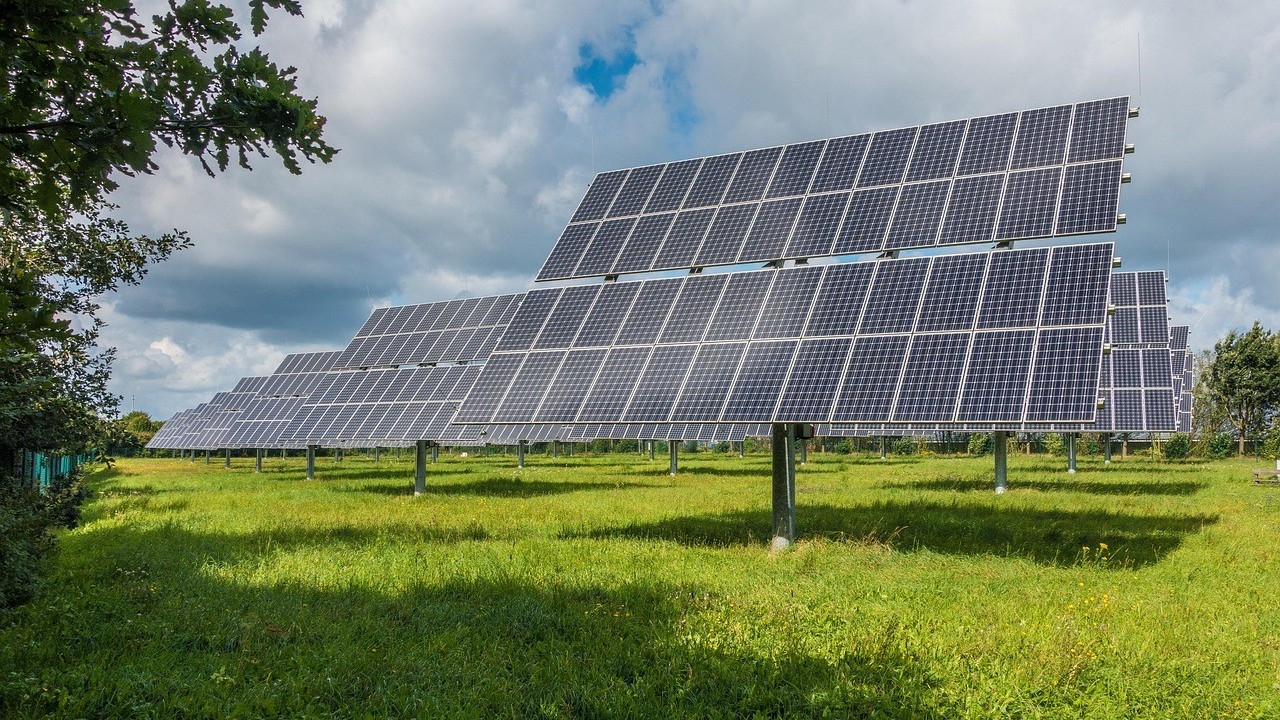
Most solar trackers are designed to chase the sun, tilting panels up to 60 degrees to squeeze out the last watt of daylight. CattleTracker gives that up on purpose. When cattle are in a paddock, the panels shift into a lower grazing mode, tilting only 20 to 30 degrees, and the steel piles that hold them stand taller than the standard 24-inch floor used on most solar farms. The clearance is generous enough that a visitor to the site could walk underneath the panels with just a little ducking, well above the cattle themselves. Silicon Ranch says the redesign adds roughly 3% to the cost of the project compared with a standard solar installation, the price of building a solar farm that a cattle herd can actually live inside.
The idea sounds simple once it is built, but getting a grazing animal to coexist with a moving steel structure took more than a tilt adjustment. Fencing had to keep cattle away from service roads and inverters without blocking the rotation between paddocks, and the panels needed enough ground clearance that a curious animal could not reach a cable or a mounting bracket. Loran Shallenberger, who runs Silicon Ranch’s Regenerative Energy and Agrivoltaics division, has said the result worked better than expected: the herd settled into the paddock rotation with little disruption to either the cattle or the array.
Six months in, the cattle are doing most of the mowing
Six months after the herd arrived, Silicon Ranch reports that the cattle are handling about 75% of the site’s mowing on their own, grazing down the grass between and under the rows instead of leaving it to a mowing crew. The company’s target, once the paddock rotation is fully established, is to push that figure up to 95%. Those numbers come from Silicon Ranch’s own tracking of the site, describing a real operating pattern over two full grazing seasons rather than a one-time estimate. Chief Commercial Officer Matt Beasley has described the project’s design standard in blunter terms: the team worked to an internal rule that the site had to be good for the land, good for the animal, and good for the solar, or the idea did not move forward at all.
Beasley has also pointed to a familiar problem in open-range cattle country as the reason the design matters: on an ordinary pasture with a single shade tree, a herd clusters around that one spot and tramples the grass underneath it bare. A solar array, with panels spread evenly across the field, works almost like a continuous row of shade trees instead of one, spreading out exactly the kind of congregation that wears out a pasture. That is the practical bet behind CattleTracker: panels that shade the grass evenly end up helping the grazing rotation rather than fighting it.
Three years of research before the first cow walked in
Christiana Solar Ranch looks like a quick experiment, but the platform behind it is not. Silicon Ranch Chief Technology Officer Nick de Vries has served as principal investigator on the CattleTracker research since field work began in 2023, and the company holds two patents covering the system. The research drew in outside partners with their own stake in grazing science: Graze LLC, founded by Dr. Anna Clare Monlezun, who also runs La Dolce Vita Ranch; ecosystem-monitoring technology firm Quanterra Systems; Colorado State University; and White Oak Pastures, a Georgia ranch known for its own regenerative grazing work. Monlezun has described the Christiana site as a foundation for continued research that spans engineering, animal science and land management rather than a single discipline.
The hardware running underneath the herd also traces back to Tennessee. First Solar supplies the panels from a manufacturing plant in northern Alabama, and NextPower builds the low-carbon steel tracker structures at a factory in Memphis. Reagan Farr, Silicon Ranch’s chief executive, has framed the project as a product of that regional supply chain as much as the research behind it, saying CattleTracker was born at the intersection of American energy, American manufacturing and American farming.
One ranch inside a bigger grazing program
Cattle are new to Silicon Ranch’s fields, but grazing livestock under solar panels is not. The company has run a sheep-grazing program across its solar portfolio since around 2022, and it has grown from roughly 400 ewes to about 5,000 sheep today, tended by 14 partner farming families across six states. Christiana Solar Ranch extends that same Regenerative Energy program to cattle for the first time at commercial scale, pairing an operating beef herd with a solar farm that sells power into the grid rather than running as a research plot on the side.
The power from Christiana Solar Ranch flows to Middle Tennessee Electric, a cooperative that serves more than 750,000 customers across 11 counties and ranks as the largest co-op in the Tennessee Valley Authority region. Chris Jones, the cooperative’s president and chief executive, has said the project does more than generate electricity, calling it a demonstration that the technology can support local agriculture at the same time. Beasley goes further on where that support could eventually lead: he expects that, before long, a steak or a burger raised on Silicon Ranch land could end up on a dinner table, sourced from the same acres that are already feeding the grid.
Beasley has called the loss of farmland to solar development one of the most serious obstacles to building new renewable energy projects in the United States, and he is careful to note that most of the acreage Silicon Ranch buys was not in active agricultural use beforehand. Christiana Solar Ranch does not settle that broader argument on its own. What it offers, six months in, is one site, one herd, and one set of operating numbers that Silicon Ranch is now trying to repeat across the rest of its portfolio.
Photo: RonaldPlett, Pixabay License.
Photo: mrganso, Pixabay License.