
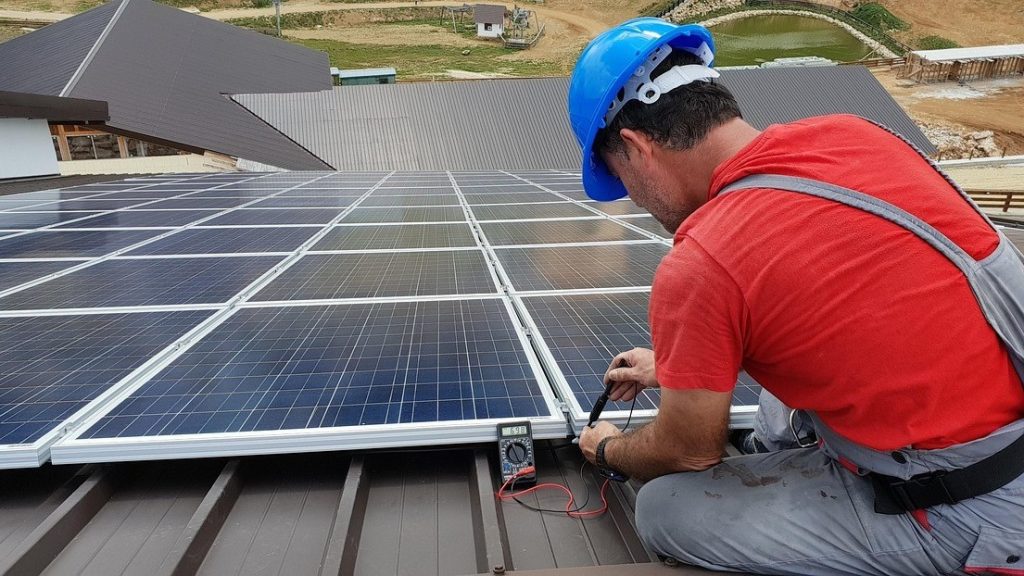
At a site in Shibata, a town in Japan’s Miyagi Prefecture, that Ricoh founded in 1967 as an electric-calculator plant called Tohoku Ricoh, machines now spend their days printing office documents instead: high-speed multifunction copiers, production printers and the key parts that go inside them, made today as Ricoh Industry’s Tohoku Site. On October 27, 2026, Ricoh announced that the same site will also start printing something else: solar cells, deposited one microscopic ink droplet at a time by the same kind of inkjet head that fires ink across a sheet of paper.
The announcement sets a target of several hundred megawatts of annual production capacity by 2030, with a future expansion to gigawatt scale under consideration. It is the clearest sign yet that Ricoh, a company known worldwide for office copiers and multifunction printers, intends to become a solar cell manufacturer using printing technology it already owns.
Where print heads start depositing more than ink
The technology at the center of the plan is a perovskite solar cell, a newer class of photovoltaic material that can be made as a thin, flexible film rather than the rigid silicon wafers used in most rooftop panels today. Instead of building the cell layer by layer in a vacuum chamber, the way thin-film solar manufacturing usually works, Ricoh prints each functional layer directly onto the substrate: the electron transport layer, the perovskite layer itself, the hole transport layer and the counter electrode, one after another, using inkjet print heads carried over from its commercial and industrial printing business. The company calls the approach Functional Material Jetting. It relies on the same precise control of microscopic ink droplets that lets an office printer place exact dots of color on a page, applied here to place exact amounts of solar cell material only where it is needed.
Ink supply systems and the substrate-transport technology that keeps a roll of paper or vinyl moving evenly through a commercial press do the same job for a continuously fed roll of solar cell substrate, which is what lets Ricoh print at speed instead of coating one static panel at a time. The company is also carrying over a second line of expertise from its office printer business: organic photoconductor technology, the light-sensitive material inside a laser printer or copier drum. Ricoh used that same know-how once before to become the first manufacturer in the world to sell a solid-state dye-sensitized solar cell, an earlier generation of printed solar technology that predates the current push into perovskite.
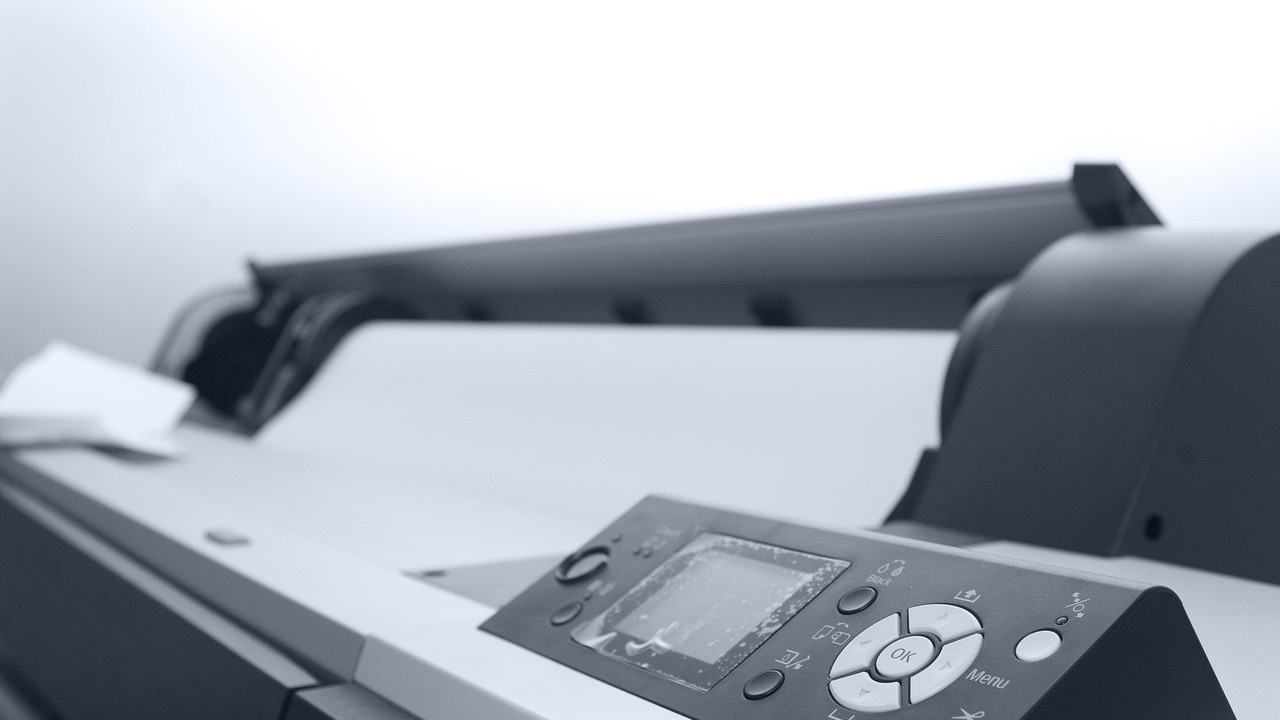
Several hundred megawatts, with gigawatts held for later
Some early coverage of the announcement led with “GW-scale production,” language that ran ahead of what Ricoh itself committed to. The company’s own release sets a nearer target: annual production capacity of several hundred megawatts by 2030, with gigawatt-scale output described as a future direction rather than a dated commitment. Perovskite solar cells remain newer and less proven at industrial scale than the silicon panels that still make up most of the world’s installed solar capacity. Durability over years of outdoor exposure remains an active research question across the whole sector, not a concern specific to Ricoh’s approach. The 2030 figure is the number Ricoh is prepared to put behind a construction timeline, with the Tohoku Site in Shibata as the place that commitment lands.
Tested above the Earth before it reaches the factory floor
The move into manufacturing follows years of testing the underlying cell technology somewhere far from a factory floor. Ricoh has worked with the Japan Aerospace Exploration Agency since 2017, through JAXA’s Space Exploration Innovation Hub Center, to develop perovskite cells durable enough for the conditions of space. In 2024, Ricoh’s cells flew aboard the small satellite Denden-01 for a six-month evaluation. On October 26, 2025, a set of Ricoh’s perovskite cells launched aboard JAXA’s HTV-X1 cargo spacecraft, bound for roughly two months of in-orbit measurement of their power output and durability under cosmic radiation and the low, uneven light a satellite actually sees, conditions perovskite cells are expected to handle well. None of that orbital testing is the Shibata production line itself, but it is the track record behind the decision to build one.
A national program, and two partners already signed on
The Shibata announcement did not happen on its own. Ricoh’s manufacturing plan has been selected for support under Japan’s GX (Green Transformation) Supply Chain Development Support Program, run by the Ministry of Economy, Trade and Industry, part of a broader government push to bring perovskite solar technology into mass production. A year earlier, in September 2025, a consortium of Ricoh, Daiwa House and NTT Anode Energy was selected for Japan’s Green Innovation Fund, administered by NEDO, to develop a related but separate application: perovskite cells light and flexible enough for rooftops and building walls where conventional silicon panels are often too heavy to install. In that project, Ricoh leads the inkjet production technology, Daiwa House leads construction and installation methods, and NTT Anode Energy adapts its power conditioning systems to handle the uneven output that comes from panels mounted on curved roofs or vertical walls. The consortium is targeting more than 300 megawatts of annual capacity by fiscal 2030 at a generation cost of 14 yen per kilowatt-hour, a timeline that runs alongside the Shibata plant without being the same project.
What links the space test, the building-integration consortium and the Shibata announcement is less a single product than a transfer of know-how. The droplet control, ink chemistry and roll-fed manufacturing that Ricoh spent decades refining for office printers are now aimed at a different kind of print job. It is a reminder that some of the manufacturing capacity the energy transition needs may come less from new, specialist solar companies than from established manufacturers finding that a skill built for one industry fits another closely enough to retool for it.
Photo: Pixabay user 8510670, Pixabay Content License.
Photo: andreas160578, Pixabay Content License.