
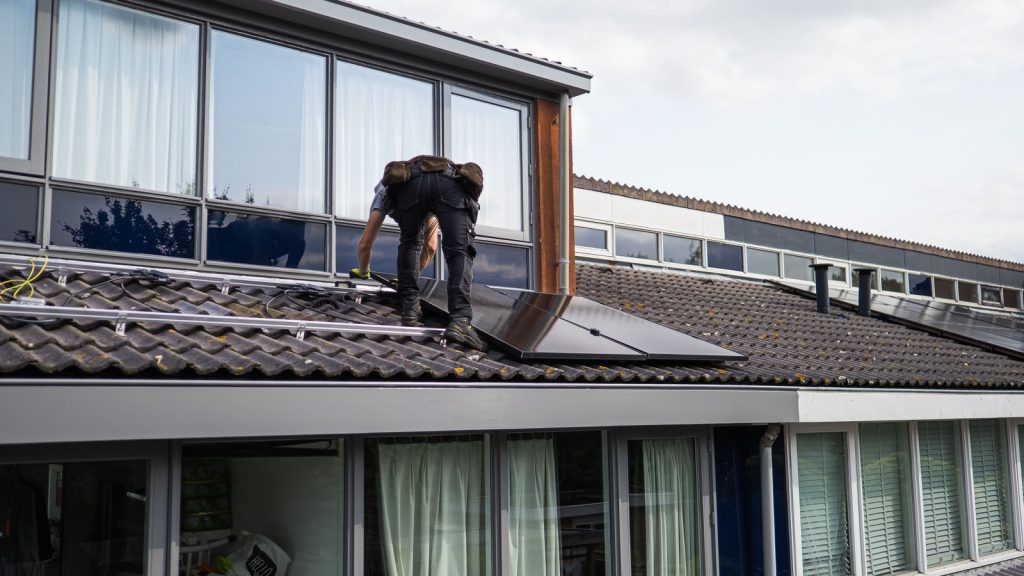
In most American cities, putting solar panels on a house means months of paperwork: permit applications, inspections, utility sign-offs, sometimes a wait stretching past six months before a single panel goes up. In Lancaster, California, that same process takes about 45 minutes, a figure Mayor Rex Parris has cited since making solar the centerpiece of the city’s recovery from the 2008 housing crash. The city didn’t invent a new technology to get there. It rewrote its own bureaucracy, and the rewrite turned out to matter more than anything on the roof.
The paperwork was the technology
Lancaster’s transformation started in 2009, when the city was near the bottom of the 2008 housing crash: unemployment near 17 percent that summer, home prices collapsed, foreclosures common across the Antelope Valley. Mayor Rex Parris, elected the same year, made solar the centerpiece of the city’s recovery plan, starting with panels on every municipal building the city owned. Parris has described the residential solar permitting process shrinking from a six-month wait down to roughly 45 minutes. The city’s building department now runs an “Instant Permits” program built on an automated review platform called Symbium, which issues qualifying residential solar and battery permits in minutes rather than weeks, without a manual review or site visit.
The city partnered with SolarCity to equip municipal buildings and schools, and now says it produces more solar power per capita than any other city in California, close to generating more renewable electricity than it consumes across the municipality as a whole.
What the city says it bought with that policy
Lancaster’s own account of the payoff centers on jobs rather than kilowatts. The city says its clean energy policies have created more than 1,000 jobs, tied to the businesses that solar manufacturing, installation, and the surrounding supply chain brought to the Antelope Valley.
Over the same period, the city’s unemployment rate fell from around 17 percent in 2009 to under 6 percent within roughly a decade, a drop that coverage of Lancaster’s turnaround regularly ties to the same policy. The national recovery from the housing crash played its part too, but the city is one of the few of its size that can point to a clean energy sector it built on purpose, and to the jobs that came with it.
The city’s hydrogen ambitions go well beyond a side project now. Element Resources is building the Lancaster Clean Energy Center, described as the largest off-grid green hydrogen production project in the United States, running entirely on more than 650 megawatts of on-site solar plus long-duration battery storage so it can operate around the clock without drawing from the grid. The plant is designed to produce roughly 22,000 tons of hydrogen a year, explicitly earmarked in part for public transit alongside trucking, rail, and port operations, distributed through a new authority called First Public Hydrogen. Commercial operation is expected in 2027; the plant is still under construction.
A policy lever with no moving parts to sell
What makes Lancaster’s case unusual next to a Bavarian town running its heating on forest waste or a former coal port turned cable factory is that its most consequential move cost almost nothing to build. Cutting a permitting process from six months to 45 minutes is not a capital project. It required no factory, no grant, no new grid infrastructure, just a decision to stop making residents wait. That is also why it is easy to overlook: there is no ribbon to cut on a shorter form. The panels get the photographs. The paperwork is why there are panels to photograph at all.
Photo : SDV Movies / Pexels