
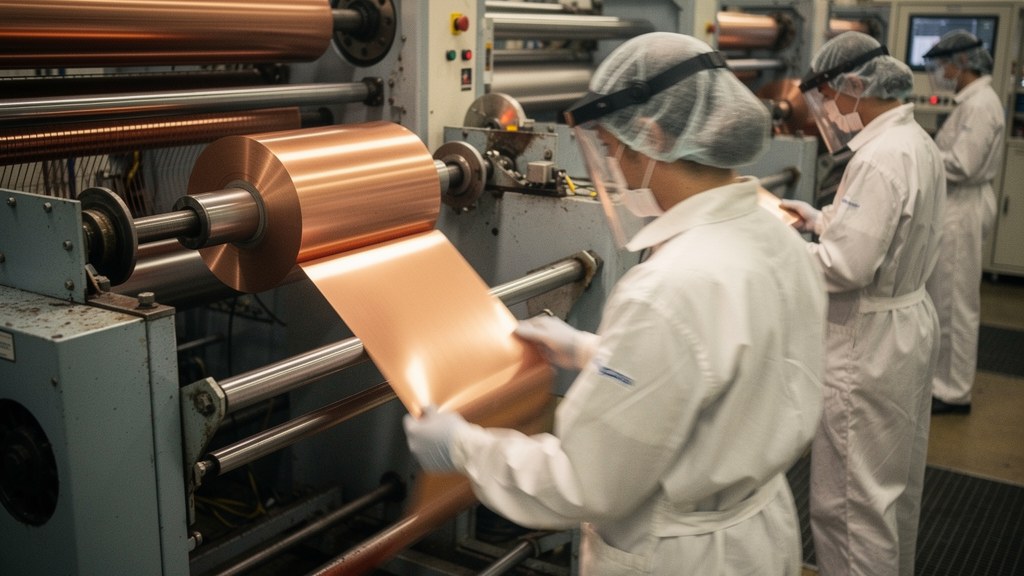
On a former Siemens site in Grenoble, wedged between the Isère river and a set of SNCF railway tracks, Verkor runs a clean room where workers cut and fold copper foil, wind it, assemble it, and package the result into battery cells. The cells that come off this line are not prototypes. They are built to the same specification as the ones that will eventually power production cars, made on a pilot line designed to work exactly like the much larger factory it exists to rehearse.
A pilot line built to be copied, not just tested
The site is called the Verkor Innovation Centre, a 15,000-square-meter facility that cost roughly 250 million euros to build, launched with an initial 100-million-euro funding round closed in July 2021. Its pilot production line can turn out 150 megawatt-hours of battery cells a year. Co-founder and CTO Christophe Mille has described the relationship between this site and Verkor’s full-scale factory in blunt terms: the company’s gigafactory near Dunkerque is essentially a version of the Grenoble site scaled up roughly a hundred times, built on a plot of land about 150 hectares wide instead of a former industrial site squeezed between a river and a railway. A few kilometers away, MagREEsource followed the same path with recycled rare-earth magnets: a 50-tonne pilot plant first, then the industrial site.
The first customer for cells coming off this pipeline is Alpine’s A390, an electric model from the Renault group, with commercial battery production planned for 2026, according to Verkor’s own announcement at the opening of the Innovation Centre.
The part of the story that isn’t a machine
Attached to the Grenoble site is something most battery plants don’t bother building: a training center. The École de la batterie, coordinated by Emilie Rondet, opened in 2022 with a target of training 1,600 people a year, mostly technicians and engineers. By roughly two years in, it had trained around 3,000 people, plus outreach to thousands of high school students, an attempt to build a skilled workforce for a French battery industry that didn’t have one at any scale before Verkor existed.
What Grenoble was rehearsing for
Verkor’s gigafactory in Bourbourg, near Dunkerque, opened on December 11, 2025, inaugurated in a ceremony attended by French President Emmanuel Macron. CEO Benoit Lemaignan marked the occasion by noting it came five years after the company’s creation. The plant starts at 16 gigawatt-hours of annual capacity, with a target of scaling to 50 gigawatt-hours by 2030, and Verkor says it has secured more than 3 billion euros in financing since 2020 to get here. The company puts the jobs figure at 1,200 direct positions and roughly 3,000 more indirectly supported in the surrounding region. Every cell that leaves Bourbourg will one day come back as material: the batteries Verkor builds today are the feedstock of tomorrow’s recyclers, the way retired laptops already feed a plant like Sims Lifecycle’s in Tennessee.
None of that scale existed in Grenoble, and none of it could have without it. The clean room on the old Siemens site is where a company with no factory yet worked out, cell by cell, what its factory would need to do before it built one.