
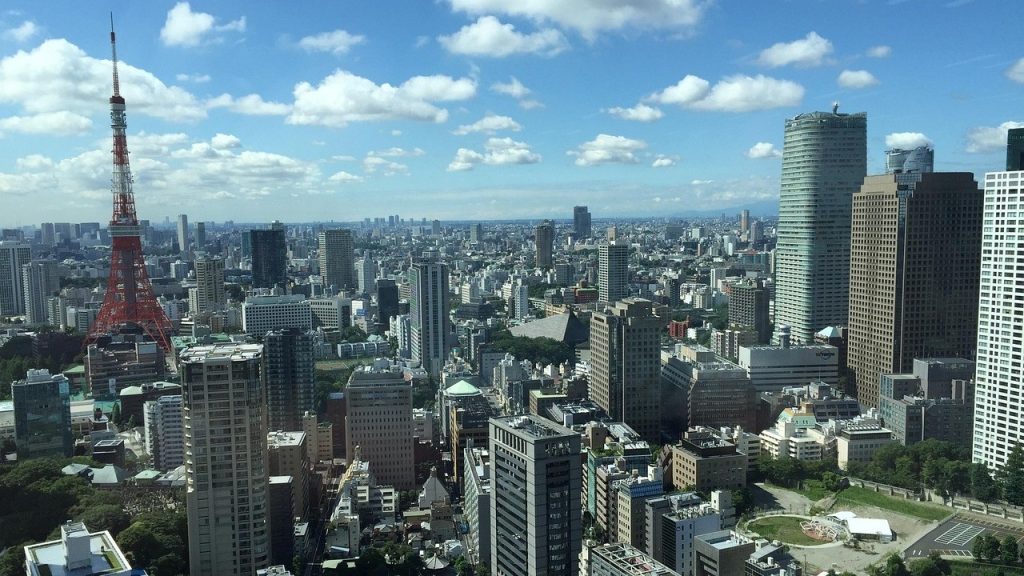
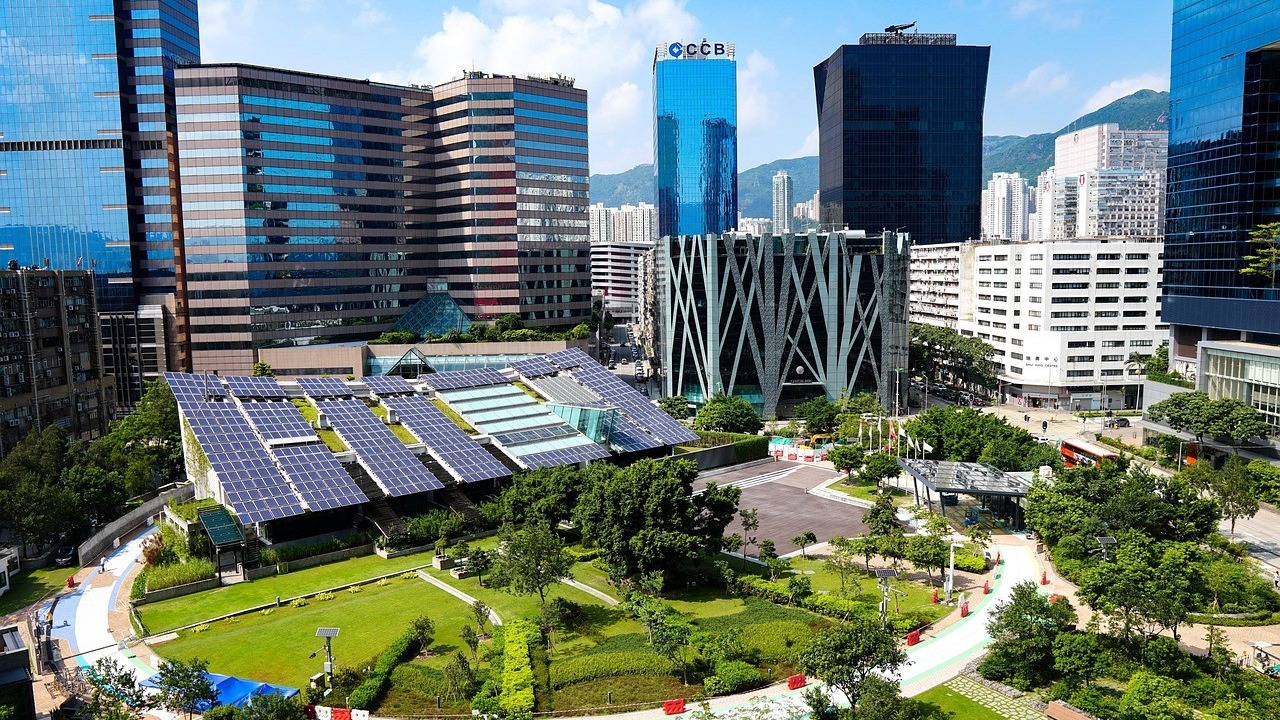
On the roof of Shinagawa Intercity, a mixed-use office and retail complex a short walk from Shinagawa Station in Tokyo’s Minato ward, rows of solar panels feed a loop that ends in hydrogen. Their electricity runs an electrolyzer, which splits water into hydrogen and oxygen. The hydrogen is stored in a hydrogen-absorbing alloy, a solid material that holds the gas much like a sponge holds water, then later passes through a fuel cell that turns it back into electricity. That electricity lights part of the complex’s shared corridors and lobbies. Nippon Steel Kowa Real Estate, which developed and manages the complex’s 337,126 square meters of floor space, announced the system on October 23, 2026, together with co-investor Sumitomo Life Insurance and builder Obayashi Corp.
Storing hydrogen as a metal hydride instead of compressing it into a tank is a choice built around the setting. A hydrogen-absorbing alloy takes up more space than a pressurized cylinder of the same capacity, but it holds the gas at low pressure and releases it steadily through the fuel cell, which suits a system meant to sit quietly inside an occupied office building rather than a dedicated industrial site.
Office towers that generate more power than their tenants use are not new to this kind of project. In Trondheim, Powerhouse Brattørkaia produces more than twice the electricity its building consumes on a typical day, mostly by angling its solar array at a thin Arctic sun. Shinagawa Intercity takes a different route toward a similar instinct: instead of feeding surplus solar power straight back into the grid, it stores the sunlight as hydrogen and spends it later.
Why Tokyo picked this complex to go first
The system is the first project approved under the Tokyo Metropolitan Government’s support program for the real-world implementation of green hydrogen production and use, according to Nippon Steel Kowa Real Estate’s announcement. That label is worth reading precisely. It refers to the program’s first approved project, not a record for hydrogen-powered buildings in Japan as a whole, and a second zaikei.co.jp report, published two days after the announcement, independently confirmed the “first project” status.
The program exists to move green hydrogen out of pilot labs and onto buildings already in daily use, and Shinagawa Intercity, a complex built across roughly 34,388 square meters of land near Shinagawa Station, is the site Tokyo chose to test that step first. Obayashi Corp handled the construction and engineering work that ties the solar array, the electrolyzer, and the fuel cell into a building that has stood for years before this system existed.
Sumitomo Life Insurance holds a co-investment stake in the complex alongside Nippon Steel Kowa Real Estate, the kind of joint ownership that is common to large Tokyo office towers, where an insurer’s long-term capital sits behind a developer’s day-to-day management. Both companies are named as partners in the October 23 announcement, next to Obayashi Corp as the contractor that built the system.
A loop built to store sunlight, not just spend it
Solar panels produce the most power around midday, while office buildings often need less electricity then than during the morning startup or the evening wind-down. The hydrogen loop addresses that mismatch directly. Rather than exporting the midday surplus to the grid, the system converts it into hydrogen that can be held and released later. An energy management system coordinates the solar array, the storage, and the fuel cell, so stored hydrogen turns back into electricity when the building actually needs it, not only when the sun happens to be out.
The companies describe the output in specific terms. Their announcement states that the system supplies part of the lighting in the complex’s shared areas, not the building’s full electricity demand, and neither that announcement nor the pv-magazine coverage that followed it lists capacity figures, in kilowatts or storage volume, for the panels, the electrolyzer, or the fuel cell.
The bigger number sits in a separate contract
Alongside the hydrogen loop, Nippon Steel Kowa Real Estate also signed an offsite physical power purchase agreement, a contract to buy renewable electricity generated elsewhere and delivered directly to Shinagawa Intercity. A second zaikei.co.jp report, published October 25, 2026, confirmed the contract independently: it brings in about 3 million kilowatt-hours of renewable electricity a year, close to 3 gigawatt-hours, and is expected to cut the complex’s carbon dioxide emissions by roughly 1,200 metric tons annually.
That volume is far larger than anything the rooftop hydrogen loop can supply on its own. The two run under separate contracts and are worth keeping apart: the hydrogen loop is the visible demonstration on the roof, built to test a new kind of energy storage under daily conditions, while the power purchase agreement carries most of the complex’s actual shift toward renewable electricity.
Shinagawa Intercity’s hydrogen loop will not run the whole building, and Nippon Steel Kowa Real Estate has not said when it starts operating day to day, only that the system was announced on October 23, 2026. What it offers instead is a working demonstration, inside a complex that spans 337,126 square meters of floor space in central Tokyo, of what it looks like to store sunlight as hydrogen rather than spend it the moment it is made. Tokyo’s subsidy program chose this complex to go first, and where the idea goes next depends on which other buildings decide to try it.
Photo: yellowmagics9, Pixabay Content License.
Photo: blazejosh, Pixabay Content License.